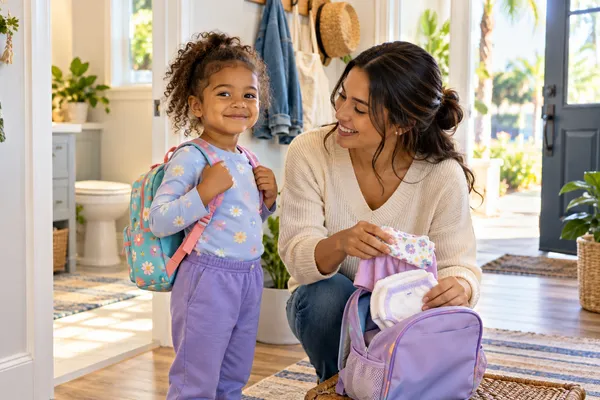
Potty Training and Daycare: A Practical Guide for Lutz Parents

Potty training can feel manageable at home—and suddenly complicated when daycare, preschool, commuting, and busy mornings enter the picture. Your child may happily use the toilet in one place and resist in another, or accidents may return after several dry days.
For families in Lutz and Tampa Bay, the goal is not to force a perfect schedule. It is to help your child receive calm, consistent support from the adults who care for them.
Quick Answer: Start by asking your childcare program how it supports toilet learning. Share your child’s words, routine, readiness signs, and current challenges. Use easy-to-remove clothing, send several labeled changes of clothes, and expect occasional accidents. Children learn at different rates, so focus on steady progress rather than a deadline.
5 Key Takeaways
Readiness matters more than reaching a particular birthday.
Ask the center about its toilet-learning routine before changing what you do at home.
Use the same simple words and general approach at home and school.
Pack easy-pull clothing and enough labeled backups for accidents.
Stay calm about setbacks and ask your pediatrician about pain, constipation, or a sudden lasting regression.
Is Your Child Ready to Start Potty Training?
Toilet learning involves several skills working together. A child has to notice body signals, communicate a need, reach the bathroom, manage clothing, follow simple directions, and feel emotionally comfortable trying.
The American Academy of Pediatrics explains that readiness includes physical, thinking, language, and emotional development—not only age. Useful signs may include:
Staying dry for longer periods
Noticing or telling you when a diaper is wet or soiled
Showing interest in the bathroom or in wearing underwear
Following one- or two-step directions
Pulling simple clothing up and down with some help
Using words, gestures, or signs to communicate the need to go
Sitting briefly without fear or intense resistance
Your child does not need to show every sign before you start a conversation with their teacher. The point is to notice patterns and choose a pace your child can manage.
Does a Child Have to Be Potty Trained for Preschool?
There is no single answer for every childcare or preschool program. Expectations can vary by classroom, age group, schedule, staffing, facilities, and the type of program.
Before assuming your child must be fully independent, ask the specific center:
Does this classroom help children who are actively learning?
Are diapers, pull-ups, or training underwear allowed?
How often are children invited to try the toilet?
What clothing and spare supplies should families provide?
How are accidents handled and communicated?
What level of independence is expected before moving to the next classroom?
Ask these questions during a visit and include them in your childcare tour checklist. Clear expectations prevent surprises for parents, teachers, and children.
Build One Team Between Home and Childcare
Children often act differently at home and at school. A child who refuses the toilet at home may follow classmates at preschool. Another child may stay dry at home but become too busy or unsure to ask at school.
Share the details teachers can use
Tell your child’s teacher:
The words your family uses for the toilet and body needs
How your child usually signals that they need to go
When they commonly have a bowel movement
Whether they are afraid of flushing, public bathrooms, or large toilets
What kind of reminder works without creating pressure
Any recent constipation, pain, medication, or major family change
Agree on a simple routine
Home and school do not have to follow an identical clock. Try to align on a few basics, such as offering a bathroom visit after waking, before leaving home, at natural classroom transitions, and before a long drive.
Use short, neutral language: “It’s bathroom time,” or “Let’s listen to your body.” Avoid bargaining, shaming, or turning every attempt into a high-pressure event.
Florida’s December 2025 Child Care Facility Handbook prohibits toilet-learning methods that punish, demean, or humiliate a child. It also requires appropriate handwashing and sanitation practices after toileting or diapering.
What to Pack for Potty Training at Daycare
A well-packed cubby makes accidents less stressful and helps your child return to the day quickly.
Send what your center requests, which may include:
Three or more complete changes of clothes
Extra underwear, training pants, or diapers as permitted
Extra socks and an additional pair of easy-on shoes
Resealable or wet bags for soiled clothing
Any wipes or diapering supplies the center asks families to provide
Clearly labeled items using your child’s full name
Choose elastic-waist pants, shorts, or skirts that your child can move quickly. Overalls, belts, complicated buttons, tight leggings, and one-piece outfits can make an urgent bathroom trip much harder.
Planning care for a toddler or preschooler in Lutz? Check availability at Blue Summit Academy and ask how classroom routines support your child’s stage of development.
How to Respond to Accidents Without Shame
Accidents are part of learning. The American Academy of Pediatrics notes that daytime accidents may continue for months after a child appears trained. A new classroom, travel, illness, a new sibling, or an exciting activity can also temporarily disrupt progress.
A calm response can be simple:
Help your child get clean and comfortable.
State what happened without blame: “Your clothes are wet. Let’s change.”
Briefly remind them what to do next time.
Return to the normal activity without a lecture.
Try not to compare your child with classmates or siblings. Progress is easier to see across several weeks than from one difficult day.
If drop-off stress seems to trigger setbacks, use a predictable goodbye routine and review our guide to easing daycare separation anxiety.
When to Pause and Ask for Help
Temporary setbacks are common, but some signs deserve extra attention. Contact your child’s healthcare provider when toilet learning involves ongoing pain, hard stools, stool withholding, blood, frequent urinary symptoms, or a sudden regression that persists.
Constipation can make children avoid the toilet and may not always be obvious. Do not punish a child for an accident or assume repeated accidents are intentional.
Your child’s teacher can describe what happens during the school day, but medical concerns should be discussed with a pediatrician. This article provides general educational information and is not a substitute for medical advice.
A Practical Weekday Plan for Lutz Families
Busy mornings can make toilet learning feel rushed. Families traveling from Cheval, Carrollwood, Odessa, or elsewhere around Lutz may also have a longer drive before drop-off.
Try this simple rhythm:
Before leaving home
Allow enough time for an unhurried bathroom opportunity.
Dress your child in easy-pull clothing.
Check that the backup-clothing bag is stocked.
Tell the teacher about any unusual morning symptoms or changes.
At pickup
Ask one or two factual questions: “Did they tell you when they needed to go?” and “What seemed to help today?” Avoid making the first conversation your child hears a detailed accident report.
At home
Continue the shared words and general routine. Keep practice brief and positive. Talk about effort—recognizing a body signal, trying, washing hands, or changing independently—not only staying dry all day.
To learn how play, routines, and age-appropriate experiences fit together, explore Blue Summit Academy’s curriculum approach and our guide to daycare, preschool, and VPK in Lutz.
Questions Parents Ask
1. What age should a child start potty training?
There is no single best age. Look for physical, communication, thinking, and emotional readiness rather than starting only because of a birthday or outside pressure.
2. Should we switch directly from diapers to underwear at daycare?
Ask your childcare program first. Centers may have different classroom practices and supply requirements. Choose an approach that teachers can support consistently and that matches your child’s current readiness.
3. How many extra outfits should I send?
Three complete labeled changes are a practical starting point, but ask the center what it recommends. Include underwear or training pants, bottoms, shirts, socks, and backup shoes when possible.
4. Why does my child use the toilet at school but refuse at home?
School routines, peer modeling, and different expectations can affect behavior. Ask the teacher what language and timing work at school, then calmly try similar cues at home without creating a power struggle.
5. When should I call the pediatrician about accidents?
Call when accidents involve pain, constipation, blood, frequent urinary symptoms, or a sudden regression that continues. Your pediatrician can help rule out a physical issue and suggest next steps for your child.
Support Progress, Not Perfection
Successful toilet learning is usually a series of small skills, not one perfect weekend. When home and childcare communicate clearly, children receive a calmer and more predictable message.
Blue Summit Academy serves children from 6 weeks through age 10 with daycare, preschool, VPK, and after-school programs in Lutz. To ask about the right program for your family, check availability at Blue Summit Academy. Submitting the form is an inquiry and does not guarantee current availability.